Qantas Economy vs. Business Class: Is Upgrading with Points Worth It?
Introduction
For many Australian travellers, the dream of turning left upon boarding a Qantas international flight is a powerful motivator to collect points. The Qantas Frequent Flyer program, one of the most popular loyalty schemes in the country, offers members the ability to upgrade from Economy to Business Class using points. But is this always the best use of your hard-earned Qantas Points? In this comprehensive guide, we will delve into the value proposition of upgrading with points on long-haul flights, compare it to outright Business Class redemptions, and explore alternative strategies to maximise your points. We’ll cover everything from the cost in points and cash to the experience differences, and provide a detailed cost-benefit analysis to help you decide if upgrading is truly worth it.
Understanding Qantas Upgrade Mechanics
Before evaluating the value, it’s essential to understand how Qantas upgrades work. Not all fares are eligible for point upgrades. Generally, only certain fare classes can be upgraded:
- Economy Sale fares are usually not eligible.
- Economy Saver fares may be eligible, but often require more points.
- Economy Flex fares are fully eligible and require fewer points.
- Premium Economy fares can also be upgraded to Business.
The upgrade is not guaranteed at the time of booking. Instead, you request an upgrade, and it is confirmed based on availability, usually closer to departure. Qantas prioritises upgrades by status: Platinum One, Platinum, Gold, Silver, and then Bronze members. This means that even if you have enough points, you might not get the upgrade if higher-status members are ahead of you.
Upgrade Costs in Points
The number of points required depends on the route and the original fare class. For example, on a flight from Sydney (SYD) to Los Angeles (LAX), a one-way upgrade from Economy Flex to Business Class might cost around 54,900 Qantas Points, while upgrading from Economy Saver could cost 83,400 points. These numbers can vary, so always check the Qantas Points Calculators for the most up-to-date information.
Co-payment and Taxes
In addition to points, you may need to pay a cash co-payment, which can range from a nominal fee to several hundred dollars, depending on the fare type and route. This co-payment covers additional taxes, fees, and charges associated with the higher class of service.
The Business Class Experience on Qantas
To assess the value of an upgrade, we must first understand what you’re getting. Qantas Business Class on long-haul international flights, particularly on the Airbus A380 and Boeing 787-9 Dreamliner, is a significant step up from Economy. Here’s what you can expect:
Seats and Comfort
- Lie-flat beds: Most Qantas international Business seats convert into fully flat beds, typically around 80 inches (203 cm) long. This is a game-changer for sleep on long flights.
- Direct aisle access: In the 1-2-1 configuration on the Dreamliner and the upper deck of the A380, every passenger has direct aisle access.
- Privacy and space: Seats are enclosed with high walls or partitions, offering much more personal space compared to Economy’s 3-3-3 or 3-4-3 layouts.
Dining and Beverages
- Restaurant-style dining: Multi-course meals designed by renowned chefs, served on demand in some cases.
- Premium beverages: A selection of Australian wines, spirits, and barista-made coffee.
- Lounge access: Business Class passengers enjoy access to Qantas International Business Lounges or partner lounges, which offer a la carte dining, showers, and quiet spaces.
Service and Amenities
- Priority check-in and boarding: Skip the queues.
- Increased baggage allowance: Typically 40kg across two pieces.
- Amenity kits: Featuring skincare products, eye masks, and more.
- Pajamas on select routes: For added comfort during the flight.
For a detailed review of the Qantas A380 Business Class, you can refer to Australian Frequent Flyer’s guide.
The Economy Experience on Qantas
In contrast, Qantas Economy Class on long-haul flights, while comfortable, is a no-frills experience:
- Seats: Standard economy seats with a pitch of 31-32 inches and width of 17-18 inches. Recline is limited.
- Meals: Complimentary meals and snacks, but with fewer choices and simpler presentation.
- Entertainment: Personal seat-back screens with a good selection of movies and TV shows.
- Baggage: Typically 30kg checked baggage on international flights.

Cost-Benefit Analysis: Points Upgrade vs. Cash Fare
Now, let’s get to the numbers. The core question is: what is the value you get per point when upgrading compared to paying cash for Business Class? We’ll use a popular route: Sydney (SYD) to London (LHR) return.
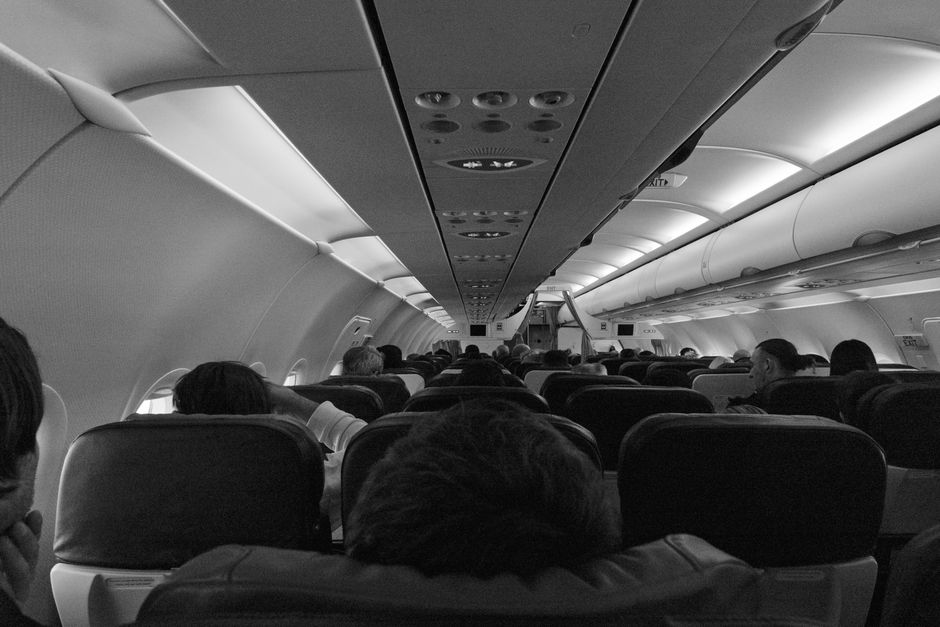
Scenario: SYD-LHR Return
Cash Fares (approximate, AUD):
- Economy Saver: $1,800
- Economy Flex: $2,400
- Business Saver: $7,000
- Business Flex: $9,000
Upgrade Costs (one-way, from Economy):
- From Economy Saver to Business: 83,400 points + ~$400 co-payment
- From Economy Flex to Business: 54,900 points + ~$200 co-payment
For a return trip, you’d need double the points and co-payments if upgrading both ways.
Value Calculation
Let’s calculate the value per point when upgrading from Economy Flex to Business on a return basis:
- Cash difference between Economy Flex and Business Saver: $7,000 - $2,400 = $4,600
- Total points required for return upgrade: 54,900 x 2 = 109,800 points
- Total co-payment: ~$400
- Net saving: $4,600 - $400 = $4,200
- Value per point: $4,200 / 109,800 = ~3.8 cents per point
This is a solid value, considering Qantas Points are often valued at around 1.0-1.5 cents each when redeemed for gift cards or toasters. However, this assumes you would have paid for Business Class in cash, which may not be the case. If you wouldn’t pay $7,000 for Business, the “value” is more psychological.
Alternative: Classic Flight Rewards
Instead of upgrading, you could use points to book a Classic Flight Reward seat outright. These are limited-availability award seats that require fewer points but have fixed taxes and charges.
For SYD-LHR return in Business Class, a Classic Reward might cost:
- 289,200 Qantas Points + ~$1,500 in taxes/fees
Compare this to the upgrade scenario: you spent $2,400 on the Economy Flex fare + 109,800 points + $400 co-payment = $2,800 out of pocket + 109,800 points. The Classic Reward costs 289,200 points + $1,500. The difference in points is 179,400 points, but you save $1,300 in cash. The value per point in this comparison is $1,300 / 179,400 = 0.72 cents per point, which is lower. However, you avoid the uncertainty of the upgrade clearing and the need to buy a specific fare class.
Comparison of Redemption Options for SYD-LHR Return
Here is a breakdown of the different redemption options for a Sydney to London return trip, assuming a point value of 1.5 cents each. Co-payments and taxes are estimates and may vary.
1、 Economy Flex + Upgrade · Cash Outlay (AUD): $2,800 · Points Required: 109,800 · Total Points + Cash Equivalent: $4,447 2、 Business Saver Cash · Cash Outlay (AUD): $7,000 · Points Required: 0 · Total Points + Cash Equivalent: $7,000 3、 Classic Reward Business · Cash Outlay (AUD): $1,500 · Points Required: 289,200 · Total Points + Cash Equivalent: $5,838 4、 Economy Saver Cash · Cash Outlay (AUD): $1,800 · Points Required: 0 · Total Points + Cash Equivalent: $1,800
From this comparison, upgrading from Economy Flex offers the lowest combined cost, but it requires a higher cash outlay than the Classic Reward and relies on upgrade availability.
Factors Influencing the Upgrade Decision
1. Upgrade Availability and Status
If you have no status or low status with Qantas, your chances of an upgrade clearing on popular routes like SYD-LAX or MEL-LHR are slim. During peak travel periods, even Platinum members may miss out. There’s no point in buying a more expensive Flex fare for the upgrade potential if the upgrade never clears. You can check upgrade availability using tools like ExpertFlyer (subscription required) to see how many Business seats are unsold before requesting an upgrade.
2. Earning Points on the Fare
When you upgrade using points, you still earn points and status credits based on the original fare class, not the upgraded class. So if you book an Economy Flex fare and upgrade to Business, you’ll earn points as per Economy Flex. In contrast, a Classic Reward ticket earns no points or status credits. This can be a factor if you’re chasing status.
3. Flexibility and Risk
Upgrades are not confirmed until days or even hours before departure. This uncertainty can be stressful. If you need guaranteed Business Class, it’s better to book it outright or secure a Classic Reward seat.
4. Opportunity Cost of Points
Qantas Points can be used for many things: flights on partner airlines, upgrades on other carriers, hotel bookings, or even shopping. If you have a specific high-value redemption in mind (e.g., a first-class flight on Emirates), using points for an upgrade might not be optimal.
Alternative Redemption Strategies
Use Points for Premium Economy Upgrades
Sometimes upgrading from Economy to Premium Economy offers better value, especially if the Business upgrade is too expensive or unavailable. Premium Economy on Qantas offers wider seats, more recline, and better meals, making long-haul flights bearable at a fraction of the points cost.
Book Partner Airlines with Points
Qantas Points can be used to book flights on oneworld partners like Cathay Pacific, Japan Airlines, and Qatar Airways. These carriers often have more award availability and lower taxes/fees. For example, a Business Class award from Australia to Europe on Qatar Airways via Doha might cost fewer points and have a superior product (Qsuite).
Upgrade on Shorter International Flights
Trans-Tasman or Australia to Asia flights have lower upgrade costs in points and cash. For instance, Sydney to Singapore might cost 27,600 points to upgrade from Economy Flex to Business. This can be a sweet spot for using points.
Points Plus Pay vs. Upgrades
Qantas also offers Points Plus Pay, where you can use points to offset the cash fare at a fixed rate (usually around 0.6 cents per point). This is generally poor value compared to upgrades or Classic Rewards and should be avoided unless you have points expiring and no other use.
Real-World Examples and Data (2023-2026)
According to Qantas Frequent Flyer data released in 2024, the most popular upgrade routes are Sydney to London, Melbourne to Los Angeles, and Brisbane to Singapore. The average success rate for upgrade requests from Gold members on these routes is around 40%, while for Platinum it’s over 70%. Bronze members have less than a 10% chance on busy routes.